Contents
0%Hey!
I made an AI song ad and an AI voiceover ad for the same mattress brand, and they do completely different jobs. Here is how to pick between them.
The same brand, two ads
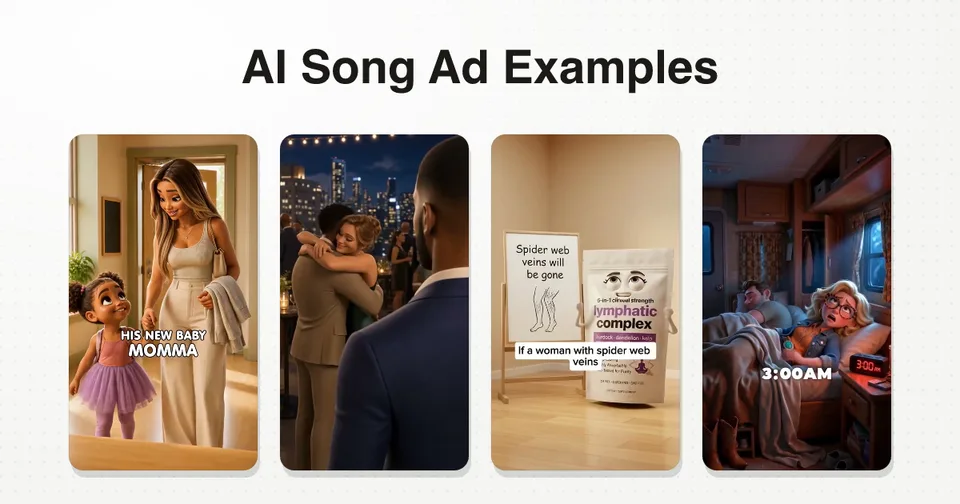
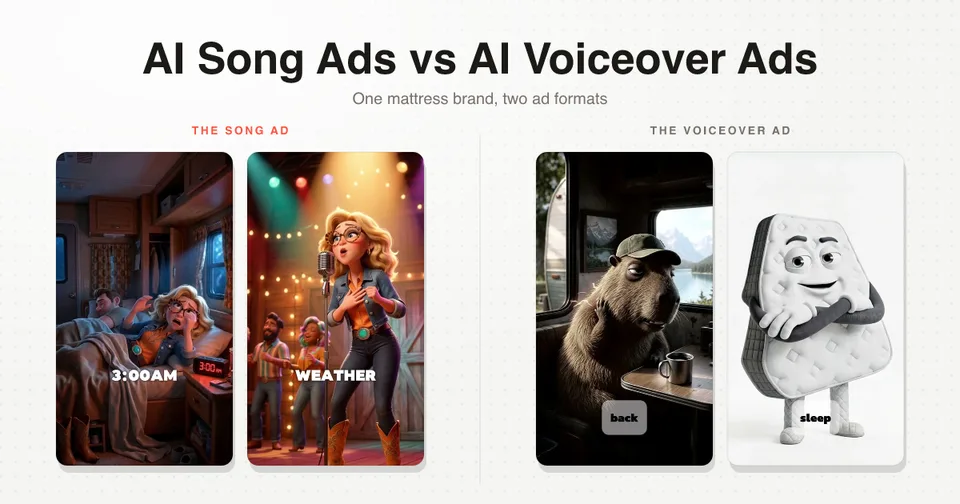
That is the song ad. A country ballad about a woman lying awake at 3 AM in an RV, a partner who moves all night, and a mattress cast as the villain. Nobody speaks a line: the song carries the story and the character sings it, so the whole thing plays like a short music video with a product in it.
Same brand, same product. This time a capybara in an RV and a talking mattress read a script straight to camera, word by word, captions under every line. It names the problem, names the foam layers and closes on the offer.
Both are fully AI generated. Both came out of the same chat and the same video model. What separates them is not quality, it is the job.
Neither format wins on its own. The song ad is the one that gets watched, gets shared and stays live for months in big ad accounts. The voiceover ad is the one that makes a specific claim, shows the product and can be rewritten this afternoon. Sell a feeling and test a song. Sell a spec and write a script.
The one set of numbers I can show you
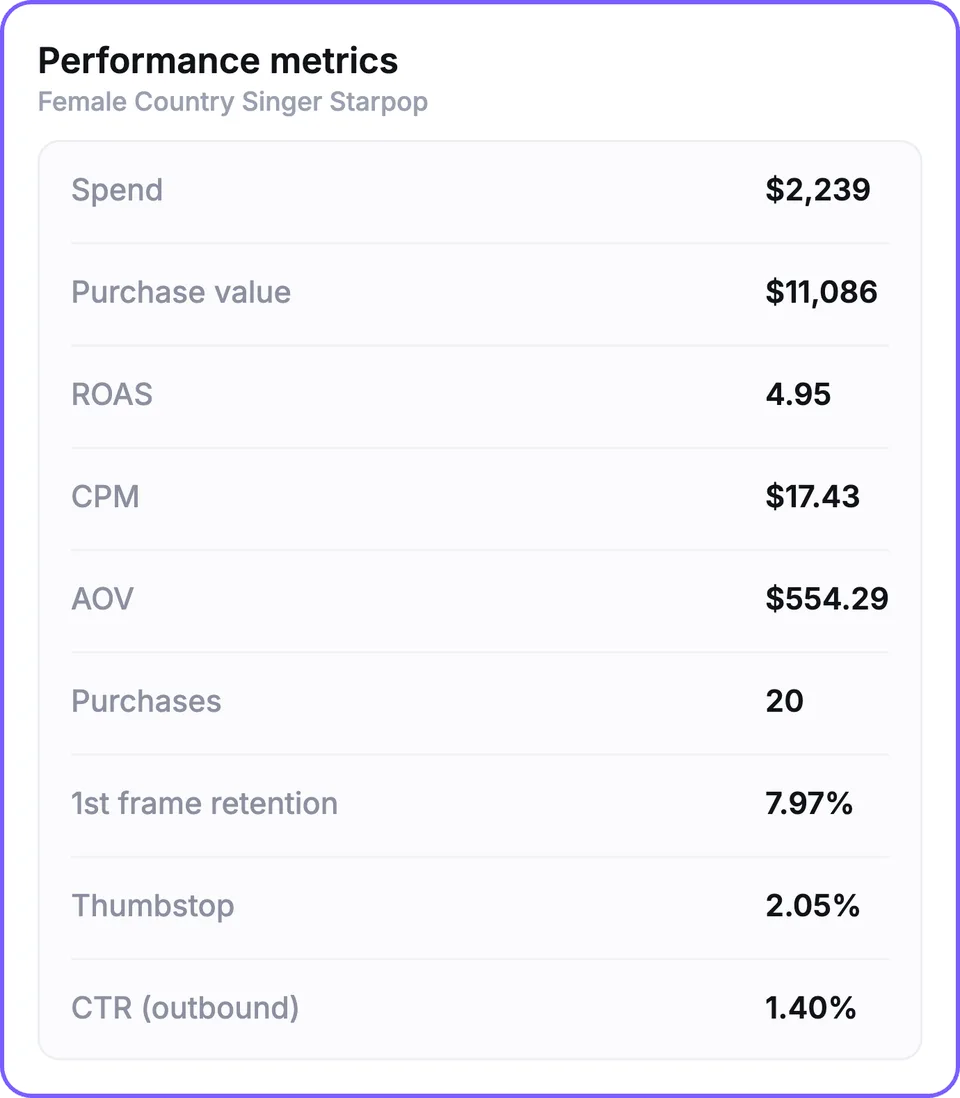
Meta performance for the mattress song ad after two months
That is the song ad above, after two months live on Meta for the mattress brand. $2,239 of spend returned $11,086, just under a 5x ROAS, across 20 purchases at a $554 average order value.
The number I would look at second is the time live. A single creative that keeps spending for two months is a stronger signal than any one week of ROAS.
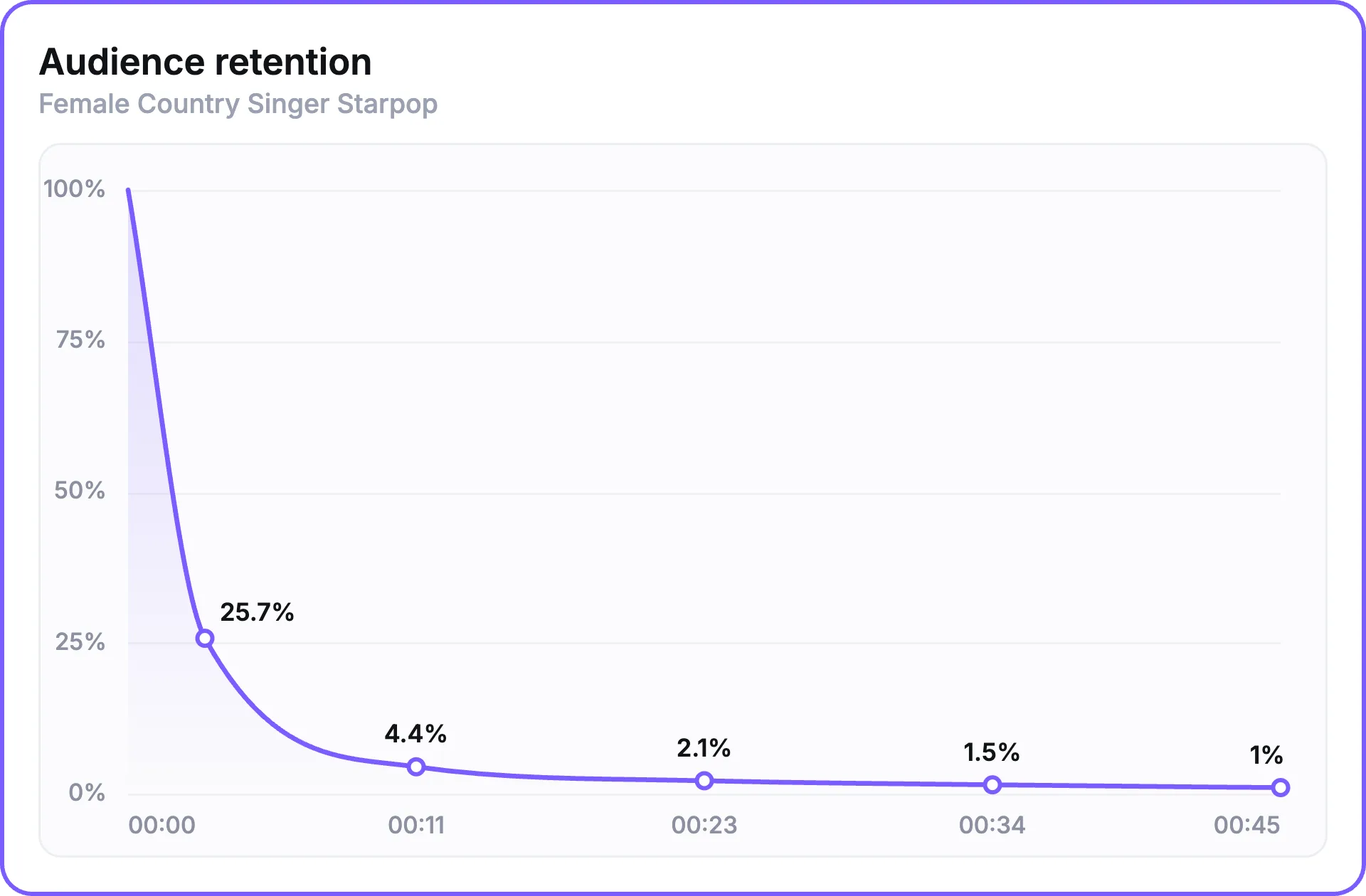
Audience retention for the mattress song ad, a steep drop in the first seconds
And here is the part nobody puts in a case study. The retention curve falls off a cliff: only about a quarter of viewers are still watching after the first couple of seconds, 4.4% are there at eleven seconds, about 1% reach 45 seconds.
A sung story about a 3 AM hot flash does not stop everybody. It stops the one woman living it, and she bought at $554. That is a filter, not a megaphone, and it is the single most important thing to understand before you brief one. The full breakdown is in the mattress case study.
Where song ads win
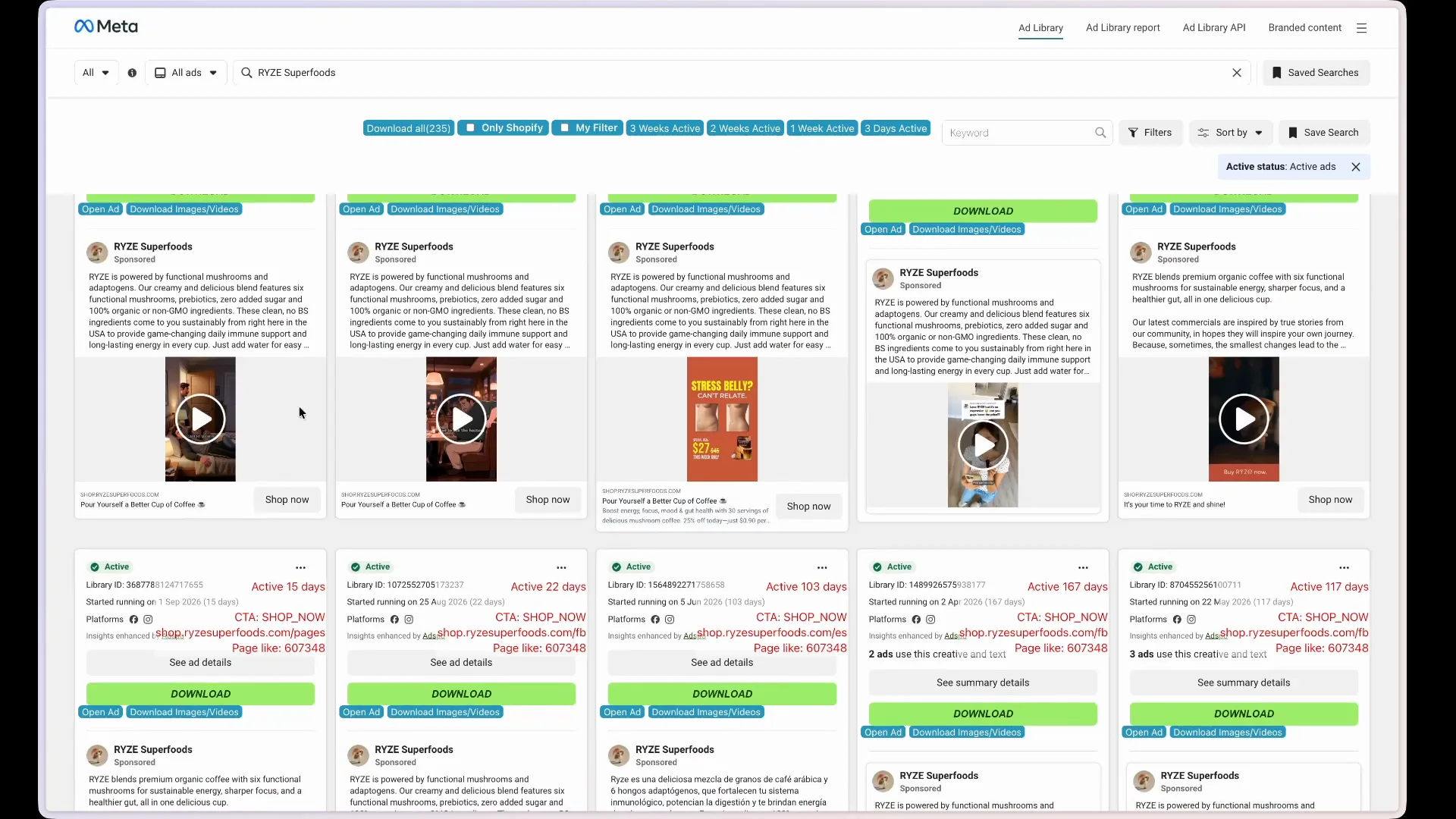
RYZE Superfoods ads in the Meta Ad Library, live for 15, 22, 103, 117 and 167 days
That is one slice of RYZE Superfoods, a brand with around 4,700 ads live at once (Meta Ad Library, September 17, 2026). Look at the days-active line on each card: 15 days, 22, 103, 117, 167. Sort the same account by impressions and the ad sitting at the top is a song ad, with more song ads right underneath it.
That is the case for the format in one screenshot. Entertaining creative gets served cheaply and it does not fatigue like a promo does, so a song ad tends to hold a slot in the account for months instead of weeks. Cheap impressions are half of why the mattress ad's ROAS held up.
It is not one vertical either. That one is a fragrance ad, and the same format is running on supplements, skincare, mattresses and local service businesses. More accounts, pulled apart one by one, in how 8-figure brands scale with song-style ads.
Three things a song does that a script cannot:
- It earns a second watch. People replay a song. Nobody replays a voiceover.
- It carries emotion without a claim. The story does the persuading, so the ad can be about the customer's life for 30 seconds before the product appears.
- It sticks. A repeated hook line is the closest thing paid social has to a jingle.
The lyric structure, the shot rules and the slicing method are written into one public SKILL.md, so an agent applies them instead of you remembering them. Get the free song-ad skill for Claude.
Where voiceover ads win
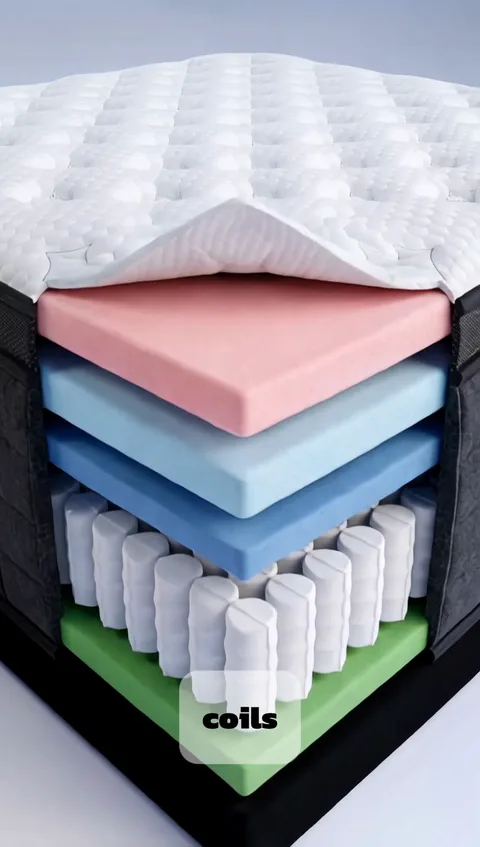
The voiceover ad naming the mattress layers while showing them
A voiceover ad can simply say the thing. The gel layer, the coils, the trial, the shipping, the code. A lyric has to rhyme and scan, so every hard detail you force into a song costs you a line of story.
That makes the voiceover ad the better tool for:
- Claims and specs. Anything a customer has to hear exactly, in order.
- Demos. Layers, textures, before and after, the thing being used.
- Offers and retargeting. Warm audiences who already know the story and need a reason to buy today.
- Speed. A wrong line is a rewrite, not a regeneration of the entire ad.
That last one is the real difference, and it comes from how the two formats are built.
Song first, or script first
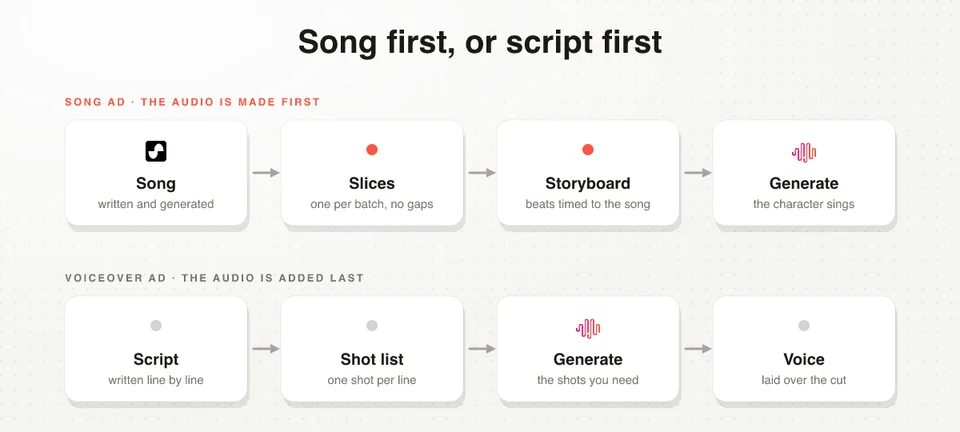
Song ads are built audio first. Voiceover ads add the audio last.
In a song ad the audio is made first, and it is the source of truth for everything after it. A song cannot be cut, so once it exists, the pacing of the ad is fixed: the shots, the slices, the storyboard and every generation are timed to it.
In a voiceover ad the audio is last. You generate the shots you need, cut them, then lay the voice over the top. Change your mind about a line and you change that line.
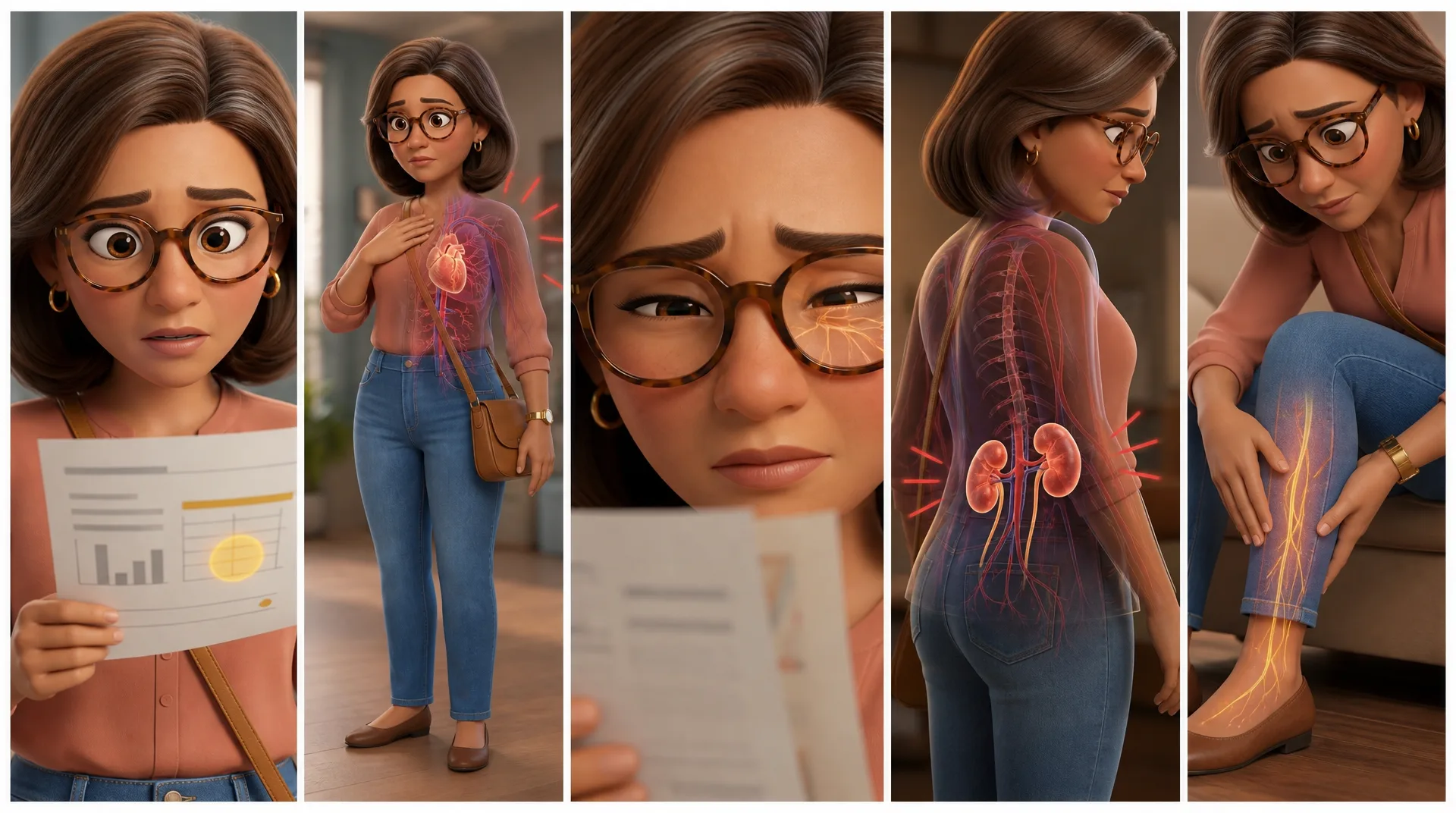 Storyboard batch, five shotsStoryboard batch, five shots
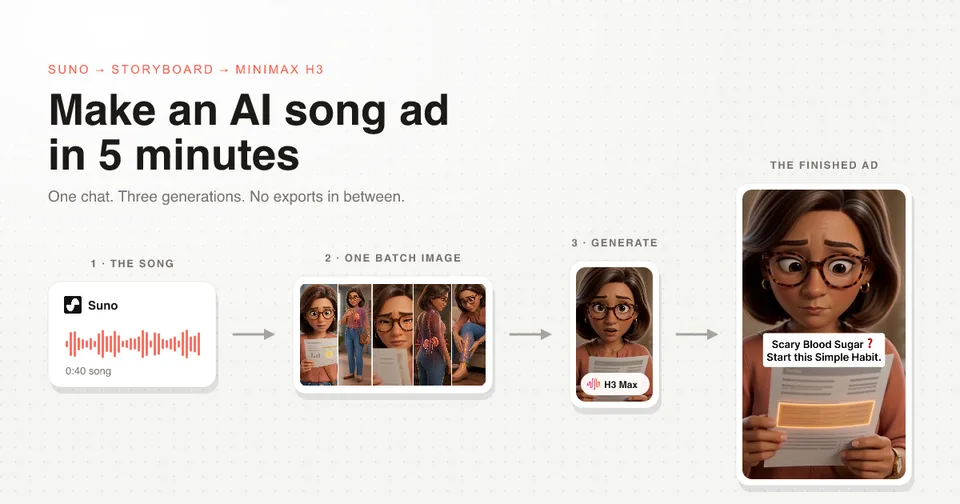
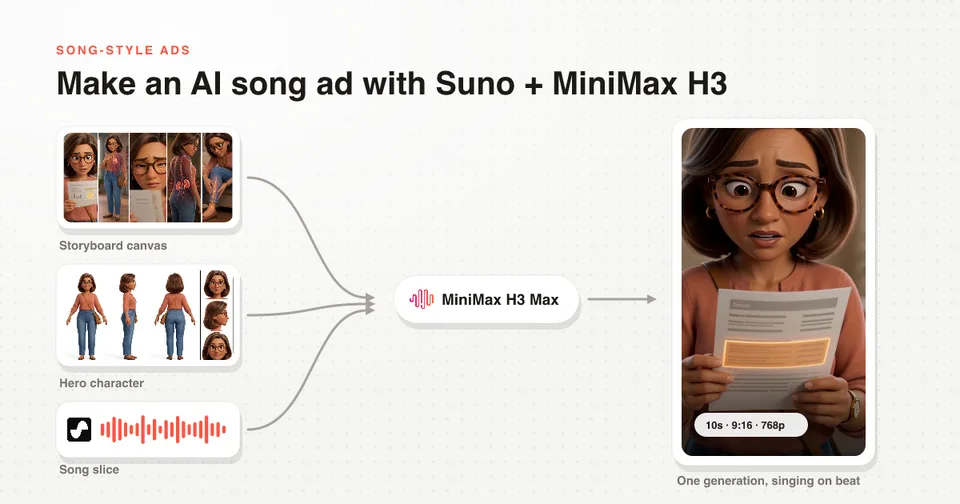
Every generation in a song ad takes three inputs: the storyboard image for that batch, the hero character sheet and the slice of song that covers those shots. The lip-sync lands because the model hears the audio, not because anyone typed timestamps into a prompt.
The slices have to be continuous, instrumentals included. Leave a gap between two slices and the song drifts out of time with the picture for the rest of the ad. The step by step version is in how to make an AI song-style ad with Suno and MiniMax H3.
Side by side
| AI song ad | AI voiceover ad | |
|---|---|---|
| What carries it | The song and the story | The script |
| Best at | Cold traffic, attention, emotion | Claims, demos, offers |
| Typical length | 2 to 5 minutes, sometimes longer | 15 to 60 seconds |
| Audio made | First, before any visual | Last, over the finished cut |
| Changing one line | Regenerate the song and re-time the ad | Rewrite the line |
| Timing | Locked by the song, slices must be continuous | Free, cut wherever you like |
| Retention shape | Filters hard early, holds the right person | Flatter, broader |
| Reusable asset | The character and the story world | The character and the script |
How I would run both
They are not rivals in an account, they are a sequence.
Build the character once
The hero character sheet is the expensive part and it carries over. The same singer, capybara or mascot can front both formats, which is why two ads for the same brand can look like one brand.
Song ad at the top
One persona, one story angle, cold audiences. Judge it on time live and cost per purchase, not on thumbstop.
Voiceover ads underneath
Same character, same world, now doing the spec, the demo and the offer for the people the song brought in.
Let the song ad run
A song ad that works tends to keep working. Iterate the voiceover ads around it rather than replacing the thing that is holding the account.
FAQ
Do AI song ads convert better than AI voiceover ads?
Not as a rule. The one creative I have full numbers on is a song ad that returned just under 5x on two months of spend, but that is one ad in one account. Song ads win attention and longevity; voiceover ads win specificity and speed.
How long should an AI song ad be?
Most of the ones scaling on Meta run 2 to 5 minutes, and some go further. That sounds insane until you remember that the format is entertainment, and that the 1% who watch to the end are the ones buying.
Which AI model makes a character sing?
MiniMax H3 Max, with the song passed in as an audio reference alongside the storyboard image and the character. Clips run up to 15 seconds, so a long ad is a series of batches rather than one generation.
Can I turn a voiceover ad into a song ad?
Not by putting music under it. The song has to be written and generated first, because it sets the pacing that every shot is cut to. Start from the story, not from the existing script.
Which one should a new brand test first?
The voiceover ad, because it is faster to fix and it tells you which claims land. Then take the angle that worked and give it to a song.
Point it at your product and it writes the lyric structure, the storyboard batches and the shot rules for you. Get the free song-ad skill for Claude.
Next Steps
- Start with the workflow. How to make an AI singing ad with MiniMax H3 is the full eight step version, from research to export.
- Look at the ads. Four song ads scaling on Meta right now, each taken apart shot by shot.
- See the bigger map. Voiceover, talking and mixed: the 3 types of animated ad, with a real ad for each.
- Compare the other side. Hyper-realistic AI lip-sync ads is the voiceover pillar: control the voice first, then sync it.
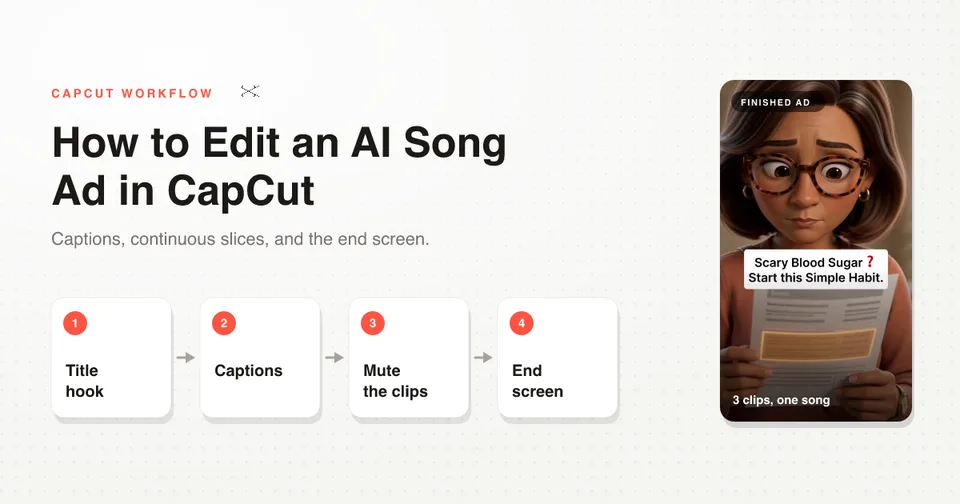
- Then the edit. How to edit an AI song ad in CapCut covers captions, slices and the end screen.
- Make one. Starpop runs the whole thing in a single chat: the research, the song, the character, the storyboard batches and the generations.
Questions, or want a second pair of eyes on which format fits your product? Come and ask in the Starpop Discord. The video walkthrough of the full process is in the sidebar.