Contents
0%Hey!
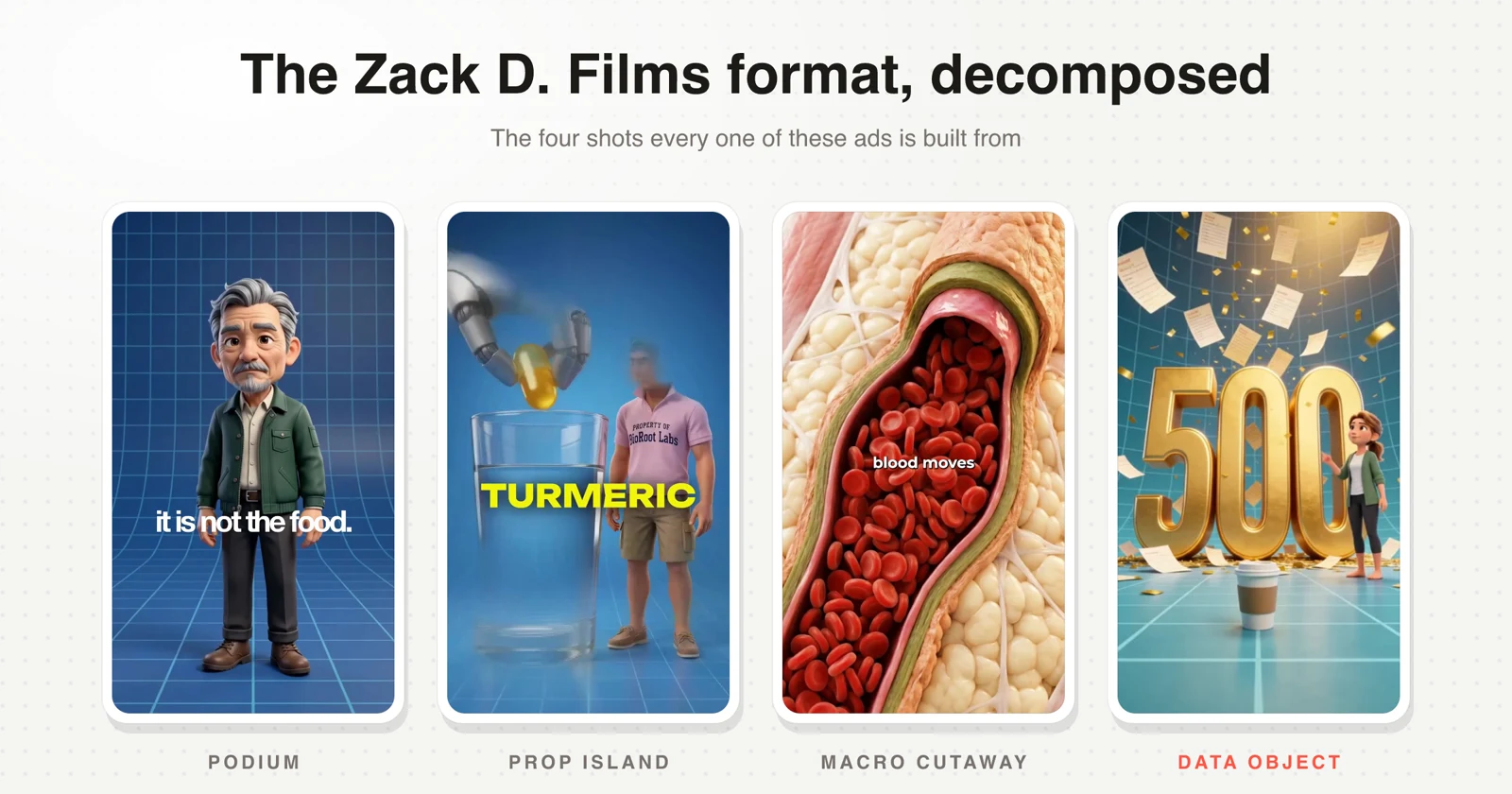
Most people trying to copy the Zack D. Films style prompt for "3D character on a blue background" and wonder why the result feels off. The blue is one variable out of seven. This post is the full set, with the actual assets for each one, the same set I used to build a complete ad on camera.
Zack D. Films is a format, not a look. A format is a bundle of locked decisions that travel together, and when one is missing, viewers feel it even if they cannot name it. Here are the seven.
1. The voice
Every one of these ads is carried by the same kind of narration: calm, matter-of-fact, slightly deadpan, letting the surprising fact do the work. Never an ad read, never on-camera character speech. It is the voice of someone patiently explaining something strange.
This is not a direction you give a generic TTS voice. The skill ships with a ready to use Zack D. Films voice clone, wired into Starpop, so the narration sounds like the format from the first take.
2. The pacing
The narration is generated before any visual exists, as one continuous take, and then the audio gets analyzed for its real timing. Every shot of the storyboard is built against those timestamps.
That order matters because the picture side of the format runs hot: something visible changes roughly once per second, while the voice stays calm on top. That contrast, fast pictures under an unhurried narrator, is a huge part of why these ads hold attention. Get the order backwards, visuals first and voice bolted on, and every clip is the wrong length. I show what that timing analysis looks like in the full workflow post.
3. The stage
The famous blue. One flat saturated cyan world that the whole ad lives on: the ad opens on it, keeps coming back to it, and uses it as the constant that makes every shot read as the same place.
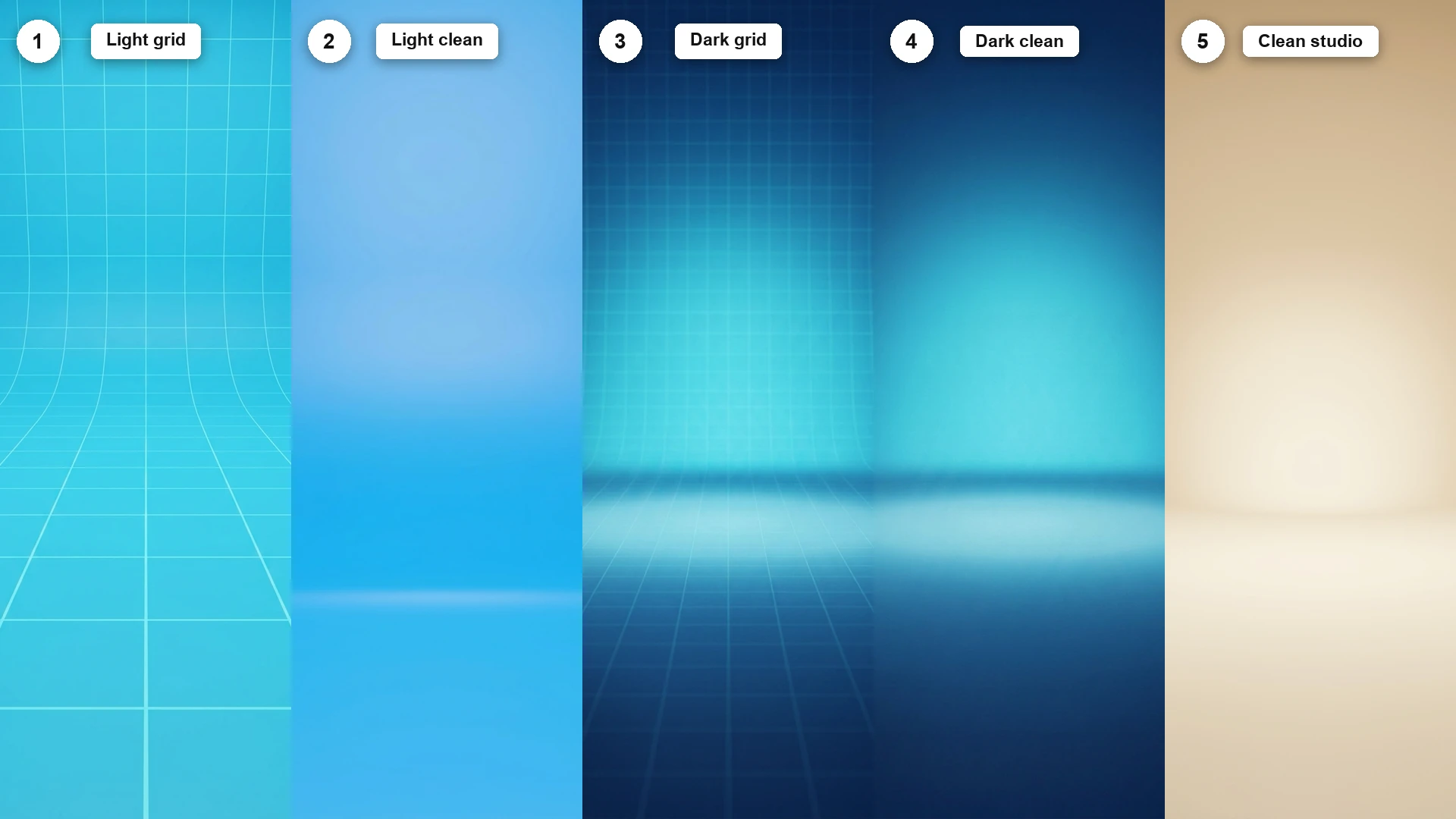
The five stage plates the skill ships: light grid, light clean, dark grid, dark clean, and clean studio
Those are the five stages the skill ships as real image files, not prompt descriptions. That distinction is the whole trick: the stage is generated once as an empty plate and attached as a reference to every frame, because a stage described in words drifts, the blue shifts shade between shots and the grid changes density. Background drift is the number one tell of a fake.
One measured rule worth keeping: the ads that read as this format hold the stage for most of their runtime and never leave it for more than about five seconds. The imitation that abandoned it for 27 straight seconds is the one that stopped feeling like a Zack D. video at all.
4. The music
The format has its own sound: a muted plucked bass arpeggio with a quiet ticking pulse, sneaky and curious at the same time. You have heard it under every one of these videos, and using generic background music is one of the fastest ways to break the illusion.
You do not have to hunt for it. The skill ships the actual track, hosted for download:
Download the Zack D. Films music track
It goes under the finished edit in your editor, low beneath the voiceover. Never into a generation.
5. The transitions
This is the pillar that separates the originals from every imitation, and we measured it.
| Ad | True hard cuts |
|---|---|
| Zack D. original (jar) | 0 in 42s |
| Zack D. original (milk) | 2 in 56s |
| Best AI imitations | 1 every ~8s |
| Weakest AI imitations | 1 every ~3s |
Zero cuts in 42 seconds. An original plays as one continuous camera journey: the camera flies into the mouth of a milk jug and comes out inside a body, a frame blows out to white and lands in the next scene, the shot squeezes horizontally as the next one slides in. The world transforms around a camera that never stops.
The imitations cut instead, and the ranking is exact: the more an ad cuts, the less it feels like the format. The good news is that this gap is closable with AI, using batched generations and frame chaining, which is exactly what the omni-reference post covers. The skill plans every seam with a named transition class: push-through, white flash, squeeze wipe, portal push, material morph.
6. The character style
The original channel uses semi-realistic, slightly unsettling characters. For ads, we deliberately swap that for Pixar-style 3D: friendly, rounded, expressive. Animated ads need permission to exaggerate, scale jumps, giant props, a character dwarfed by a capsule, and the Pixar register grants it without the creepiness.
Two rules make the character work as a format element:
- One character, locked once. Generate a character sheet, then attach that same image to every frame. The best ads use the character as a scale anchor: he never changes while the world changes scale around him, tiny beside a giant glass, chest-deep in powder. That pins consistency, humanizes every abstract shot, and carries the comedy.
- Claims become physical objects. Numbers are extruded gold geometry with real shadows, the wrong option is a red X that shatters, molecules are letter glyphs. Flat text on screen collapses the format into a generic explainer.
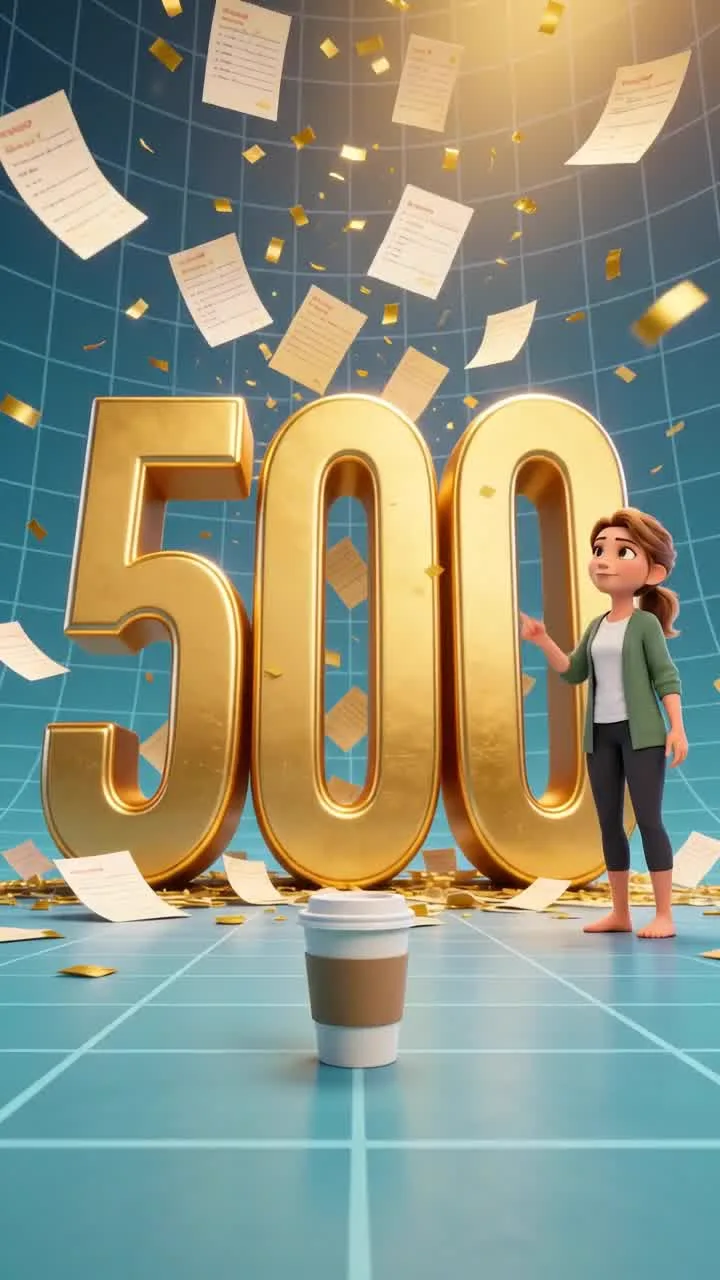
A claim as a physical object: a towering extruded gold 500 beside a tiny coffee cup on the cyan stage
That frame is from our own build: "500 recipes for the price of your weekly coffee" as geometry. The scale relationship IS the argument. And because the stage is one flat colour field, colour doubles as a state machine: gold for value, red for danger, green for the healthy response, grayscale for the rejected alternative.
7. The skill that carries it all
Six pillars is a lot to hold in your head, which is why the seventh exists: all of it is packaged as one SKILL.md that runs in Claude, Starpop, or any agent.
The five stage plates, the voice, the music track, the shot grammar, the transition classes, and the full build order in one file. Download it free, no account needed.
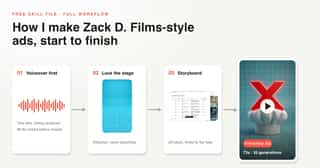
It is not a prompt pack. It runs the actual order: research, script, voiceover, timing analysis, storyboard, batched generation, edit. Watch it build a complete ad in the video, every step on screen.
Next steps
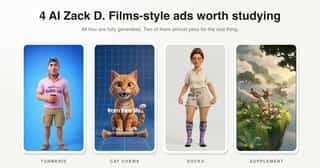
See the seven pillars applied end to end in the full workflow post, study the four best AI examples with these pillars as the scorecard, or go straight to the technique that fixes the transitions.
Free, no account required, works in Claude or any agent. Get it here.